
Blog
From Manual to Automated: How PINE Helps Asset Managers Eliminate Operational Bottlenecks
Chidwilasini Nalagandla | 13 July 2026
Most asset managers begin with operational processes that work well on a small scale. When you're managing a single strategy, a handful of funds, or limited trading activity, manual workflows can be manageable.
Over time, however, growth creates complexity.
New funds are launched. Trading volume increases. Reporting requirements expand. Compliance obligations become more demanding. And processes that once were straightforward can quickly become operational bottlenecks.
At PINE, we understand that operational excellence isn't just about keeping up with growth. It's about building processes that allow growth to happen without sacrificing accuracy, responsiveness, or client service.
As an outsourced operations partner, we're responsible for helping asset managers navigate increasing operational complexity without adding internal burden. That's why we continually evaluate and improve how we work, leveraging automation where it adds value while ensuring our experienced professionals remain at the center of every client engagement.
Manual processes often seem manageable until they begin consuming a disproportionate amount of time and resources.
Operational teams can spend hours reviewing reports, comparing data sets, reconciling information, and performing routine checks. While these activities are essential, they can divert time away from higher-value work, such as supporting clients, investigating exceptions, enhancing controls, and improving operational processes.
As organizations grow, manual processes can create several challenges:
For asset managers, these inefficiencies can ultimately affect reporting timelines, operational visibility, and scalability.
At PINE, automation is about eliminating repetitive, low-value tasks so our operations and compliance professionals can spend more time delivering insights, resolving complex issues, and providing the high-touch support our clients rely on.
The result is a more efficient operating model that strengthens both service quality and operational controls. Let's review some real-world examples.
As fund operations grow more complex, reporting processes naturally involve larger volumes of data and increasing numbers of reports, imports, and data feeds.
Before automation, Principal Financial Officer team was manually comparing 10 to 15 sheets across two N-MFP filings each month — opening prior and current month files side by side and reviewing 500 to 1,000 individual data points field by field.
With data spanning general fund information, series-level details, class-level holdings, daily liquidity figures, portfolio securities, and beneficial ownership records, two staff members would spend one to two hours per fund cross-checking every value to identify what had changed.
In practice, however, only 10%–20% of fields differed month over month, meaning the vast majority of review time was spent confirming data that hadn't changed. But because exceptions were unpredictable and spread across any of the 10+ sheets, the full manual scan could never be skipped regardless of how routine the filing period was.
PINE utilizes automated tools to compare datasets, identify changes, and surface exceptions automatically.
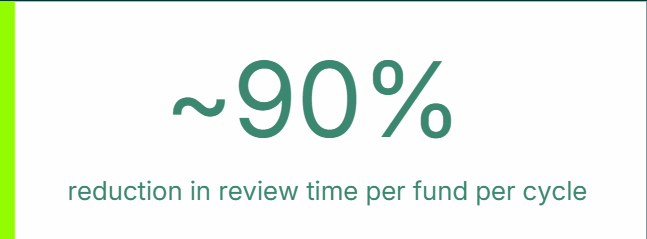
After moving to automated comparison with exception-based reporting, the entire review cycle takes under 10 minutes per fund. Staff upload both files, click a single button, and the tool automatically reads all 26 sheets, matches records by the appropriate identifier — EDGAR class ID for class-level data, CUSIP for portfolio securities, Reference Key for beneficial owners — and surfaces only the fields that differ. Day-driven sheets like daily liquidity and net asset values are checked for reasonability against their own averages, flagging statistical outliers rather than forcing a line-by-line read. What previously required two people and one to two hours of manual effort now takes one person under 10 minutes, representing approximately a 90% reduction in review time per fund per cycle.
Automating report comparison provides several advantages for asset managers:
By focusing attention on exceptions rather than reviewing entire datasets, PINE helps clients receive timely, actionable information while maintaining the high level of oversight they expect.
Reconciliation is one of the most critical operational functions in asset management, and it's also an area where process improvements can have a significant impact on efficiency and scalability.
Before automation, the ETF Trade Desk team manually reviewed dozens of cash, position, and transaction records across multiple custodians each cycle — a process that took approximately 30 minutes per review. With records spread across separate files and reference trackers, teams had to open each file individually, cross-check against fund attribute and authorized person’s data, and manually identify any breaks or exceptions. The number of exceptions surfaced was unpredictable — sometimes just one or two, sometimes more — meaning the full review could never be skipped even on days with few transactions to process.
PINE leverages automated validation processes and exception-based reporting to streamline reconciliation workflows.
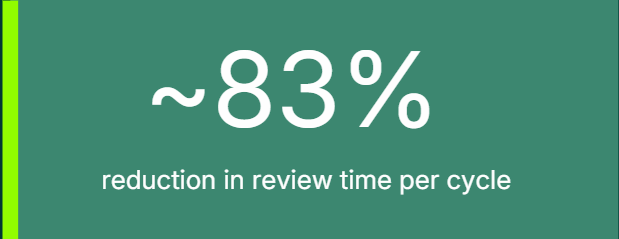
After moving to exception-based reporting, the entire reconciliation cycle takes approximately five minutes. Our team can click a single button, and the tool automatically reads all order files, validates them against the relevant trackers, and surfaces only the exceptions that require attention — flagging issues like missed cut-offs, unauthorized submitters, or missing fund data. What previously took 30 minutes of manual effort now takes five, representing an 83% reduction in review time per cycle.
Exception-based reporting delivers meaningful benefits, including:
By automating routine validation and surfacing exceptions quickly, PINE helps clients maintain strong operational controls while supporting growth and increasing complexity.
Strong operational controls are essential for supporting growth, managing risk, and maintaining confidence in reporting processes. As organizations scale, the volume of routine monitoring and validation activities naturally increases alongside the business.
Before automation, Adviser Compliance Support services team manually processed 13F filings for 15 to 20 clients every quarter — a cycle that often consumed more than a week. For each client, an analyst would open the raw holdings file, cross-reference every security against the SEC's quarterly All Securities List to confirm reportability, and evaluate each position against regulatory thresholds to determine whether it qualified for inclusion. Complicating the process, many securities appeared multiple times in a single file — requiring the analyst to identify duplicates, manually combine the positions, and re-evaluate the totals. A single client took 15 to 30 minutes, and with 15 to 20 clients in a compressed filing window, the full cycle stretched beyond a week of dedicated effort.
PINE leverages automated workflows to perform routine validations and monitor activities efficiently and consistently.
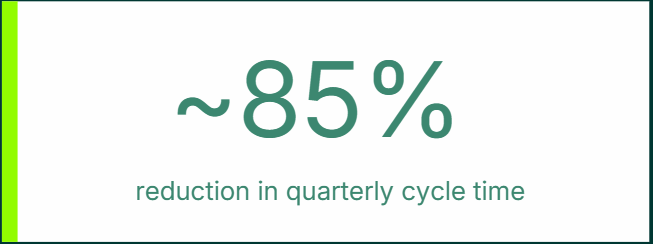
After moving to automated screening and consolidation, the same process takes under five minutes per client. Our team can upload two files, click a single button, and the tool automatically validates every security against the SEC list, consolidates duplicates, applies the regulatory thresholds, and categorizes the results into a structured output ready for filing. What previously required a full week across all clients is now completed in under five hours total, representing approximately an 85% reduction in quarterly cycle time while eliminating the manual errors that came with combining positions by hand.
Smarter operational controls deliver meaningful benefits, including:
By automating routine validations while maintaining expert oversight, PINE strengthens the operational foundation that supports client growth and evolving business requirements.
The ultimate goal of automation is to help asset managers scale their businesses without creating operational headaches.
As fund structures become more complex, trading activity increases, and regulatory requirements evolve, asset managers need operational partners that can support growth without compromising service quality.
By continuously improving processes and leveraging technology where appropriate, PINE can support increasingly sophisticated operational needs while maintaining the high-touch service model our clients expect.
Put simply, automation helps us spend less time on repetitive processes and more time helping our clients navigate complexity, solve problems, and grow their businesses with confidence.
The most effective operational support often goes unnoticed by clients because everything is working as intended.
Clients should not have to chase down reconciliation issues, troubleshoot delayed reports, question data accuracy, or wonder whether their operational infrastructure can keep pace as they grow. They should be able to trust that the processes supporting their business are being monitored, refined, and strengthened without requiring their daily attention.
At PINE, that peace of mind is intentional. Behind every client engagement, we continuously invest in process improvements, workflow enhancements, technology, and operational controls designed to support accuracy, efficiency, and scalability.
Clients may not see every refinement happening behind the scenes, but they benefit from them every day through smoother execution, fewer distractions, and greater confidence in the operational foundation supporting their business.
Great operations are never static.
As markets evolve, technologies improve, and client needs change, operational processes must evolve as well.
At PINE, continuous improvement is part of our commitment to delivering exceptional service. By refining our processes and investing in smarter ways of working, we help clients focus on what matters most: managing portfolios, raising capital, and growing their businesses.
Growth has a way of revealing operational gaps that weren't visible at smaller scale. The firms that scale successfully aren't necessarily the ones with the most resources; they're the ones that build operational foundations capable of growing alongside the business. That's what PINE is built to support.
If your operations are starting to feel the strain, let's talk about what a stronger foundation looks like for your firm.
Contact us
Over time, however, growth creates complexity.
New funds are launched. Trading volume increases. Reporting requirements expand. Compliance obligations become more demanding. And processes that once were straightforward can quickly become operational bottlenecks.
At PINE, we understand that operational excellence isn't just about keeping up with growth. It's about building processes that allow growth to happen without sacrificing accuracy, responsiveness, or client service.
As an outsourced operations partner, we're responsible for helping asset managers navigate increasing operational complexity without adding internal burden. That's why we continually evaluate and improve how we work, leveraging automation where it adds value while ensuring our experienced professionals remain at the center of every client engagement.
The Problem with Manual Operations
Manual processes often seem manageable until they begin consuming a disproportionate amount of time and resources.
Operational teams can spend hours reviewing reports, comparing data sets, reconciling information, and performing routine checks. While these activities are essential, they can divert time away from higher-value work, such as supporting clients, investigating exceptions, enhancing controls, and improving operational processes.
As organizations grow, manual processes can create several challenges:
- Valuable staff time is consumed by repetitive tasks.
- Operational risk increases as the volume of data grows.
- Teams spend time identifying issues instead of resolving them.
- Processes become increasingly difficult to manage consistently.
For asset managers, these inefficiencies can ultimately affect reporting timelines, operational visibility, and scalability.
What Automation Really Means at PINE
At PINE, automation is about eliminating repetitive, low-value tasks so our operations and compliance professionals can spend more time delivering insights, resolving complex issues, and providing the high-touch support our clients rely on.
The result is a more efficient operating model that strengthens both service quality and operational controls. Let's review some real-world examples.
From Report Comparison to Exception Management
As fund operations grow more complex, reporting processes naturally involve larger volumes of data and increasing numbers of reports, imports, and data feeds.
Before
Before automation, Principal Financial Officer team was manually comparing 10 to 15 sheets across two N-MFP filings each month — opening prior and current month files side by side and reviewing 500 to 1,000 individual data points field by field.
With data spanning general fund information, series-level details, class-level holdings, daily liquidity figures, portfolio securities, and beneficial ownership records, two staff members would spend one to two hours per fund cross-checking every value to identify what had changed.
In practice, however, only 10%–20% of fields differed month over month, meaning the vast majority of review time was spent confirming data that hadn't changed. But because exceptions were unpredictable and spread across any of the 10+ sheets, the full manual scan could never be skipped regardless of how routine the filing period was.
Today
PINE utilizes automated tools to compare datasets, identify changes, and surface exceptions automatically.
After moving to automated comparison with exception-based reporting, the entire review cycle takes under 10 minutes per fund. Staff upload both files, click a single button, and the tool automatically reads all 26 sheets, matches records by the appropriate identifier — EDGAR class ID for class-level data, CUSIP for portfolio securities, Reference Key for beneficial owners — and surfaces only the fields that differ. Day-driven sheets like daily liquidity and net asset values are checked for reasonability against their own averages, flagging statistical outliers rather than forcing a line-by-line read. What previously required two people and one to two hours of manual effort now takes one person under 10 minutes, representing approximately a 90% reduction in review time per fund per cycle.
Why It Matters
Automating report comparison provides several advantages for asset managers:
- Faster reporting and operational turnaround times
- Greater visibility into meaningful changes across reporting periods
- More efficient use of experienced operational resources
- Increased capacity to support growing reporting requirements
- More time dedicated to analysis
By focusing attention on exceptions rather than reviewing entire datasets, PINE helps clients receive timely, actionable information while maintaining the high level of oversight they expect.
From Manual Reconciliation to Exception-Based Reporting
Reconciliation is one of the most critical operational functions in asset management, and it's also an area where process improvements can have a significant impact on efficiency and scalability.
Before
Before automation, the ETF Trade Desk team manually reviewed dozens of cash, position, and transaction records across multiple custodians each cycle — a process that took approximately 30 minutes per review. With records spread across separate files and reference trackers, teams had to open each file individually, cross-check against fund attribute and authorized person’s data, and manually identify any breaks or exceptions. The number of exceptions surfaced was unpredictable — sometimes just one or two, sometimes more — meaning the full review could never be skipped even on days with few transactions to process.
Today
PINE leverages automated validation processes and exception-based reporting to streamline reconciliation workflows.
After moving to exception-based reporting, the entire reconciliation cycle takes approximately five minutes. Our team can click a single button, and the tool automatically reads all order files, validates them against the relevant trackers, and surfaces only the exceptions that require attention — flagging issues like missed cut-offs, unauthorized submitters, or missing fund data. What previously took 30 minutes of manual effort now takes five, representing an 83% reduction in review time per cycle.
Why It Matters
Exception-based reporting delivers meaningful benefits, including:
- More accurate cash and position information
- Faster identification and resolution of operational issues
- Greater operational visibility
- Increased efficiency as trading volumes grow
- Better information to support investment and business decisions
By automating routine validation and surfacing exceptions quickly, PINE helps clients maintain strong operational controls while supporting growth and increasing complexity.
From Administrative Tasks to Scalable Oversight
Strong operational controls are essential for supporting growth, managing risk, and maintaining confidence in reporting processes. As organizations scale, the volume of routine monitoring and validation activities naturally increases alongside the business.
Before
Before automation, Adviser Compliance Support services team manually processed 13F filings for 15 to 20 clients every quarter — a cycle that often consumed more than a week. For each client, an analyst would open the raw holdings file, cross-reference every security against the SEC's quarterly All Securities List to confirm reportability, and evaluate each position against regulatory thresholds to determine whether it qualified for inclusion. Complicating the process, many securities appeared multiple times in a single file — requiring the analyst to identify duplicates, manually combine the positions, and re-evaluate the totals. A single client took 15 to 30 minutes, and with 15 to 20 clients in a compressed filing window, the full cycle stretched beyond a week of dedicated effort.
Today
PINE leverages automated workflows to perform routine validations and monitor activities efficiently and consistently.
After moving to automated screening and consolidation, the same process takes under five minutes per client. Our team can upload two files, click a single button, and the tool automatically validates every security against the SEC list, consolidates duplicates, applies the regulatory thresholds, and categorizes the results into a structured output ready for filing. What previously required a full week across all clients is now completed in under five hours total, representing approximately an 85% reduction in quarterly cycle time while eliminating the manual errors that came with combining positions by hand.
Why It Matters
Smarter operational controls deliver meaningful benefits, including:
- Stronger operational oversight
- Greater consistency across workflows
- Increased scalability as business complexity grows
- More efficient use of operational and compliance resources
- Greater confidence in operational processes and reporting
By automating routine validations while maintaining expert oversight, PINE strengthens the operational foundation that supports client growth and evolving business requirements.
Helping Asset Managers Scale
The ultimate goal of automation is to help asset managers scale their businesses without creating operational headaches.
As fund structures become more complex, trading activity increases, and regulatory requirements evolve, asset managers need operational partners that can support growth without compromising service quality.
By continuously improving processes and leveraging technology where appropriate, PINE can support increasingly sophisticated operational needs while maintaining the high-touch service model our clients expect.
Put simply, automation helps us spend less time on repetitive processes and more time helping our clients navigate complexity, solve problems, and grow their businesses with confidence.
What Clients Never See (But Benefit from Every Day)
The most effective operational support often goes unnoticed by clients because everything is working as intended.
Clients should not have to chase down reconciliation issues, troubleshoot delayed reports, question data accuracy, or wonder whether their operational infrastructure can keep pace as they grow. They should be able to trust that the processes supporting their business are being monitored, refined, and strengthened without requiring their daily attention.
At PINE, that peace of mind is intentional. Behind every client engagement, we continuously invest in process improvements, workflow enhancements, technology, and operational controls designed to support accuracy, efficiency, and scalability.
Clients may not see every refinement happening behind the scenes, but they benefit from them every day through smoother execution, fewer distractions, and greater confidence in the operational foundation supporting their business.
Operational Excellence Is Never Finished
Great operations are never static.
As markets evolve, technologies improve, and client needs change, operational processes must evolve as well.
At PINE, continuous improvement is part of our commitment to delivering exceptional service. By refining our processes and investing in smarter ways of working, we help clients focus on what matters most: managing portfolios, raising capital, and growing their businesses.
Growth has a way of revealing operational gaps that weren't visible at smaller scale. The firms that scale successfully aren't necessarily the ones with the most resources; they're the ones that build operational foundations capable of growing alongside the business. That's what PINE is built to support.
If your operations are starting to feel the strain, let's talk about what a stronger foundation looks like for your firm.
Contact us